
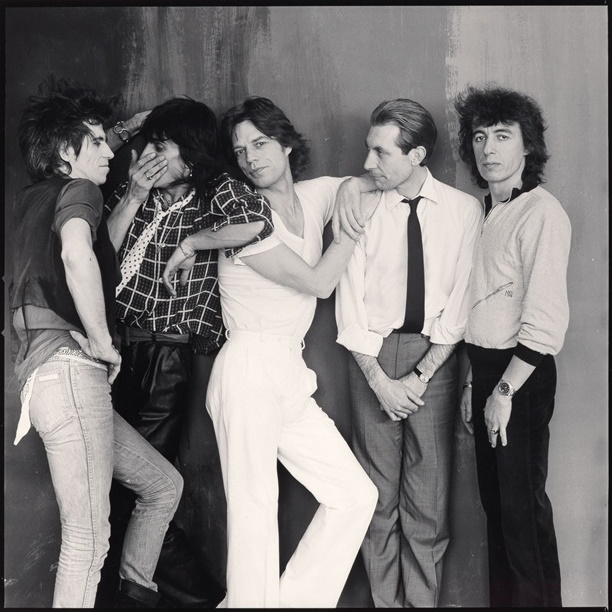
Rock history tends to celebrate explosions.
The Rolling Stones gave us plenty of those — Exile on Main St., Sticky Fingers, Some Girls. Big statements. Big swagger. Big mythology.
But sometimes the most important chapters happen after the smoke clears.
The Rolling Stones’ Emotional Rescue (1980) and Tattoo You (1981) captured the band discovering a new kind of sound in the early 1980s.
For me, have become exactly that — records that reveal deeper truths every time the needle drops. They are often treated like transitional albums in the Stones catalog, wedged between the swagger of the ‘70s and the overproduced excess that would eventually creep into arena rock. But that lazy narrative misses the point entirely.
These records are not transitional.
They are transformational.
And the 2009 remixed and expanded editions — especially when paired with the incredible outtakes and alternate takes floating around from those sessions — reveal a band evolving in real time while somehow sounding effortless doing it.
That’s the magic of the Rolling Stones.
They make genius sound casual.

Emotional Rescue is one of the most misunderstood albums ever made. Listen to the ultra phunky remixed version of the title song above.
People wanted another Some Girls. Instead, the Stones delivered something stranger, smoother, looser, and infinitely more sophisticated.
Put this album on with good headphones and listen carefully.
Not loudly.
Carefully.
What jumps out immediately is Charlie Watts.
Charlie doesn’t attack songs. He guides them. His drumming on Emotional Rescue demonstrates why he remains one of the greatest drummers in rock history — not because of complexity, but because of restraint. His beats are deceptively simple, yet nobody else sounds remotely like him. There’s this elegant hesitation in his groove, a jazz player’s patience living inside rock-and-roll songs.
Every snare hit matters.
Every cymbal touch breathes.
There’s space in his playing that modern drummers simply don’t leave anymore.
On tracks like “Dance Pt. 1,” “She’s So Cold,” and the title track, Charlie’s groove creates an atmosphere more than a rhythm. The band floats on top of him.
And then there’s the horn work.
Subtle. Stylish. Never overplayed.
The Stones understood something many bands forgot in the late ‘70s and early ‘80s: horns should enhance swagger, not replace it. These arrangements slide into the songs like late-night neon reflections on wet pavement. They never scream for attention. They seduce you into noticing them.
Meanwhile, Mick Jagger may actually be at his coolest peak vocally during this era. Not necessarily his rawest. Not his loudest. But coolest.
There’s confidence dripping from every line.
He isn’t trying to overpower the music.
He’s dancing inside it.
The falsetto on “Emotional Rescue” still feels dangerous. “Send It to Me” sounds like downtown Manhattan after midnight. Even the weirdness works because the Stones were confident enough to follow instinct instead of expectation.
That’s why this album ages so well.
It never tries too hard.

Tattoo You should have been impossible.
An album stitched together from outtakes and unfinished tracks somehow became one of the greatest records the band ever released.
That alone tells you how unbelievably good the Rolling Stones were at this point in their evolution.
Most bands’ leftovers are disposable.
The Stones’ leftovers became “Start Me Up.”
Think about that for a second.
But what makes Tattoo You special isn’t just the hits. It’s the sequencing. The feel. The confidence to let songs breathe.
Side One struts.
Side Two drifts into a smoky dreamscape.
“Slave” is hypnotic. Listen to the remixed version above. It is one of my favorite songs of all time.
“Heaven” feels almost ambient decades before ambient rock became fashionable. “Waiting on a Friend” remains one of the warmest and most human songs the Stones ever recorded.
And once again, Charlie Watts quietly anchors the entire thing with his unmistakable touch.
No unnecessary fills.
No showing off.
Just groove, feel, and timing so precise it almost disappears.
That’s mastery.


The outtakes from these sessions are where the mythology becomes reality.
You hear a band experimenting fearlessly.
Different grooves.
Alternate lyrics.
Extended jams.
Songs still searching for their final shape.
And somehow, even unfinished, they sound alive.
That’s what separates the Stones from almost everybody else. They understood that perfection isn’t the point. Feel is the point.
The looseness matters.
The imperfections matter.
Those sessions captured a band evolving beyond blues rock into something more sophisticated without losing the grime underneath it all.
They were older.
Smarter.
More rhythmically adventurous.
And somehow still dangerous.

The more time passes, the clearer it becomes:
Emotional Rescue and Tattoo You are not secondary Stones records.
They are essential chapters in the band’s evolution.
These albums captured the Rolling Stones learning how to age without becoming boring — a trick almost no legendary rock band has ever mastered.
They embraced groove over aggression.
Atmosphere over excess.
Subtlety over spectacle.
And in doing so, they created two of the most underrated albums in rock history.
Go back and listen again.
Really listen.
Charlie Watts will teach you that greatness doesn’t always announce itself loudly.
Sometimes it just swings quietly in the background while the coolest band in the world keeps evolving right in front of you.


Leave a Reply