
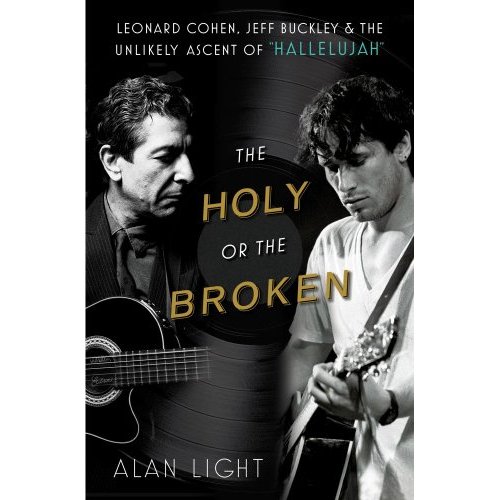

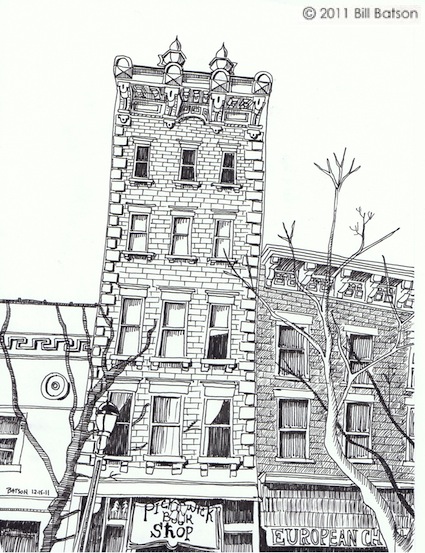
While walking down Nyack’s Broadway on Christmas Eve…in the window of legendary Pickwick Books, I noticed two books — one for a friend about Hemingway and his sailboat — the other for me, entitled “The Holy or the Broken: Leonard Cohen, Jeff Buckley & The Unlikely Ascent of ‘Hallelujah.”
Now, I’ve never read nor seen a book written about just one song.
 To that end…fueled by Midori and Club soda (yes, its empty)…
I finished the 254 page new hardcover in two short sittings… scribbling notes in the margin and enjoying the musical cloud it took me too.
Just like talking music with good friends, Alan Light (former editor of Vibe and Spin), engaged me in the banter.
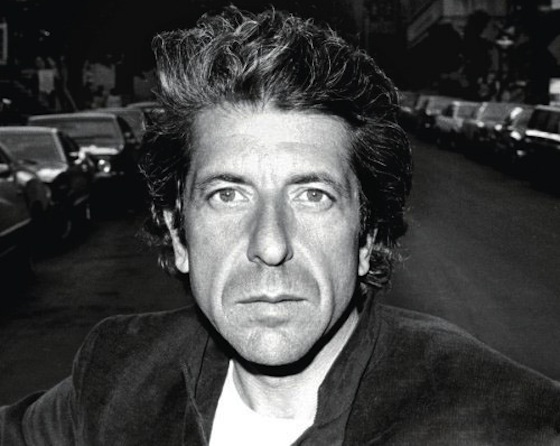 |
| Leonard Cohen |
 |
| John Cale |
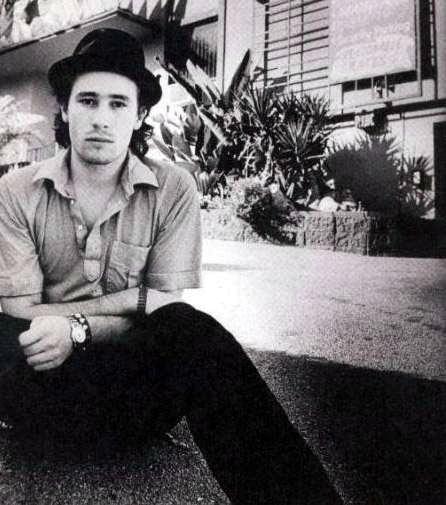 |
| Jeff Buckley |
For those that need a background on the song by Leonard Cohen, which has today become the most popular genre-bending song ever:
1984 :: the year record sales reached all-time time highs with the likes of Prince’s “Purple Rain”, Bruce’s “Born in the USA” and Madonna’s “Like A Virgin”…a 50-yr old Leonard Cohen recorded his new labor of love song “Hallelujah” for his new album “Various Positions.” Cohen wrote eighty verses for the song, but recorded just four. The studio hated it and the song received little attention at the time.
Seen here in its original and raw version:
1991 :: Velvet Underground’s John Cale reworks the song for a Cohen tribute album.
1994 :: the 25 yr old fast rising sensation Jeff Buckley — son of the similar fated troubadour dad Tim Buckley — records the pinnacle version of the song that starts a unique phenomenon that continues today.
2000 :: the song appears in the movie “Shrek” and introduces “Hallelujah it an entirely new generation of fans.
2001 :: the song is used by VH-1 as a backdrop to the haunting videos of 9-11. It is played thousands of times during this intense period of grieving and fear.
For the next 3 years it was featured in almost every major TV show’s pinnacle episode (West Wing (see clip below), ER, The OR, House, the L Word, Without a Trace).
It become THE song finalists on American Idol and like-talent shows across the globe used to show their emotional power.
More than 300 versions of the song have been recorded by the likes of Bono, Willie Nelson, Poppa Chubby, Imogen Heap, Rufus Wainwright, kd lang, Sheryl Crow, Michael McDonald, Michael Bolton, Fall Boy Out, Bon Jovi, Neil Diamond, Chris Betti, Justin Timberlake…even ukulele virtuoso Jake Shimabukuro gets in the action (see below)….who shows that even without its words, the songs tells a powerful story.
Although their paths don’t cross, I like the way the author intertwines how the song impacted both the lives of Buckley and Cohen…kind of like a sacred torch passed.
Leonard Cohen said the song represented absolute surrender in a situation you cannot fix or dominate.
Bon Jovi says the song’s chorus is a musical representation of a sexual climax, the verse like foreplay.
Christian, Gay, Jewish, depressed, punks, births, weddings, deaths, tragedies… this songs means so much to people who stand for something in expressing how they feel….I couldn’t pass up sharing the story in its entirety with those on the TBRanch Ramble.
I could ramble (no pun intended) for hours on Leonard Cohen…his time at Mt Baldy Monastery in the 90’s, the years in the early 60’s when he lived on the Greek islands with no electricity, plumbing writing power poetry…but I won’t. Read the book, watch his documentary, better yet, listen to his works.
I could ramble (pun intended) on about Jeff Buckley and his odd rise to stardom, but I won’t. I will say this, he was a true talent and a musician’s musician. Check out his bootleg album “Live at Sin-e”.
I will ramble though another minute about this song that has that “thing” that makes people so inspired.
In the Hebrew sense, “hallelujah” is an active word that tells the listener to praise god. In the Christian tradition, “hallelujah” is more of a word of praise rather than a directive.
The many singers pick and choose which verses work for their particular situation…Cohen’s deadpan wit is sometime removed by the more jovial renditions. No matter the setting, the song is uniquely uplifting. I agree with Alana Light and believe its power lies in the melody and the way the chords move.
Like Garcia’s famous “Morning Dew” solos at Cornell University in 1977, the song builds, it lifts, then there’s always a specific note or word that brings it back down before bringing the listener higher again.
There is no right way to sing “Hallelujah”… my favorite line in the book is that “it expresses triumph as well as loss or desire, perseverance…those that want or need it to serve as a hymn can find that sense of soaring grace and those who respond to its sense of struggle and confusion can present that as the song’s backbone.”
It captures why music is like a drug that hooks so many of us.
Here is a recent version at Coachella from Leonard, post-his Buddist monk years in which he recaptures the song’s wit and purity from the sitcoms and movie producers.
Halleluja!
Halleluja!
+++++++++
A funny aside note, in the book Cohen says, “the only person who seemed to recognize that song (when it was first put out there) was Bob Dylan.”

Leave a Reply